Sensate Yoga Move
S.Y.M© Perceived by the senses
The Polyvagal Theory
Polyvagal Theory in short
For more info, visit Dr Stephen Porges website
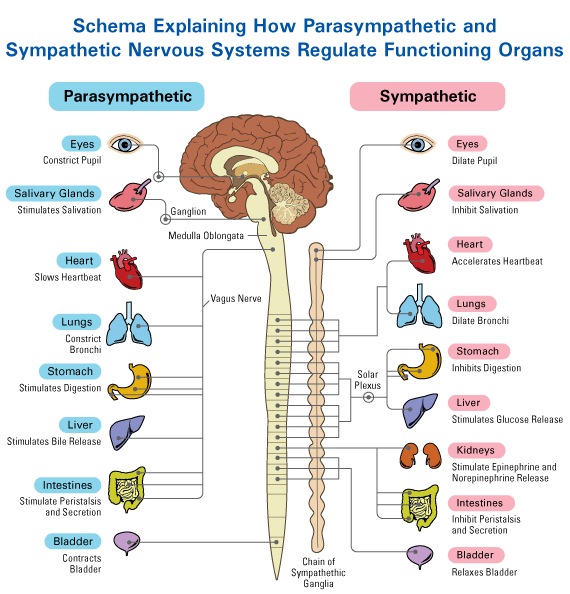
Traditionally, the autonomic nervous system (ANS) was taught and universally accepted as a stress-or-relaxation model based on 2 components:
- the sympathetic nervous system, which was active in stress responses to threats and danger, preparing the body to either flee the scene or fight.
- the parasympathetic nervous system, which expressed itself in the relaxation response when the body went into slowdown/rest/digest mode.
This old model assumed that there was a single vagus nerve and did not take into account that there are actually 2 different neural pathways that are both called vagus nerve.
The Polyvagal theory recognizes that there are 2 separate branches of the vagus nerve, that originates in 2 different locations. It introduces a system where the ANS consists of 3 neural circuits:
- the ventral vagal branch of the parasympathetic: positive states of relaxation and social engagement. The key word here being safety. When we feel safe in our environment and in our relationships, we can both mobilized or immobilized our body without fear, moving and interacting in the world relaxed, curious, engaged and socially connected.
- the sympathetic nervous system is our fight/flight response: mobilization with fear of the body in case of threat or danger, activation, alertness.
- the dorsal vagal branch of the parasympathetic: shutdown, immobilization with fear when faced with overwhelming threat or danger, and depressive behaviors
The Polyvagal theory presents another dimension of our understanding of the autonomic nervous system. The ANS not only regulates the function of our inner organs; the 3 neural circuits also relate to our emotional states, which in turn drive our behaviors.
"If we are threatened, or in physical or emotional danger, it is appropriate for your autonomic nervous system to respond physiologically with a temporary state of sympathetic activity or with dorsal vagal activity. These changes help us to survive. Once the actual threat or danger is over, it is best if we can bounce back into a state of social engagement, coming out of the state of stress or depression and return to feeling physically and emotionally safe." excerpt from Stanley Rosenberg's book "Accessing the healing power of the vagus nerve"
The Polyvagal theory has been essential in the treatment of trauma. The work of Stephen Porges has awakened a growing interest in successful applications of these understandings by psychologists, psychiatrists, and trauma therapists.
At Sensate Yoga Move, we explore the way Polyvagal theory can be mindfully applied to the Yoga practice.
Click here to read more from Stanley Rosenberg on the polyvagal theory 3 neural pathways.